
Pulled Over for DWI in St. Bernard Parish? What to Do Next
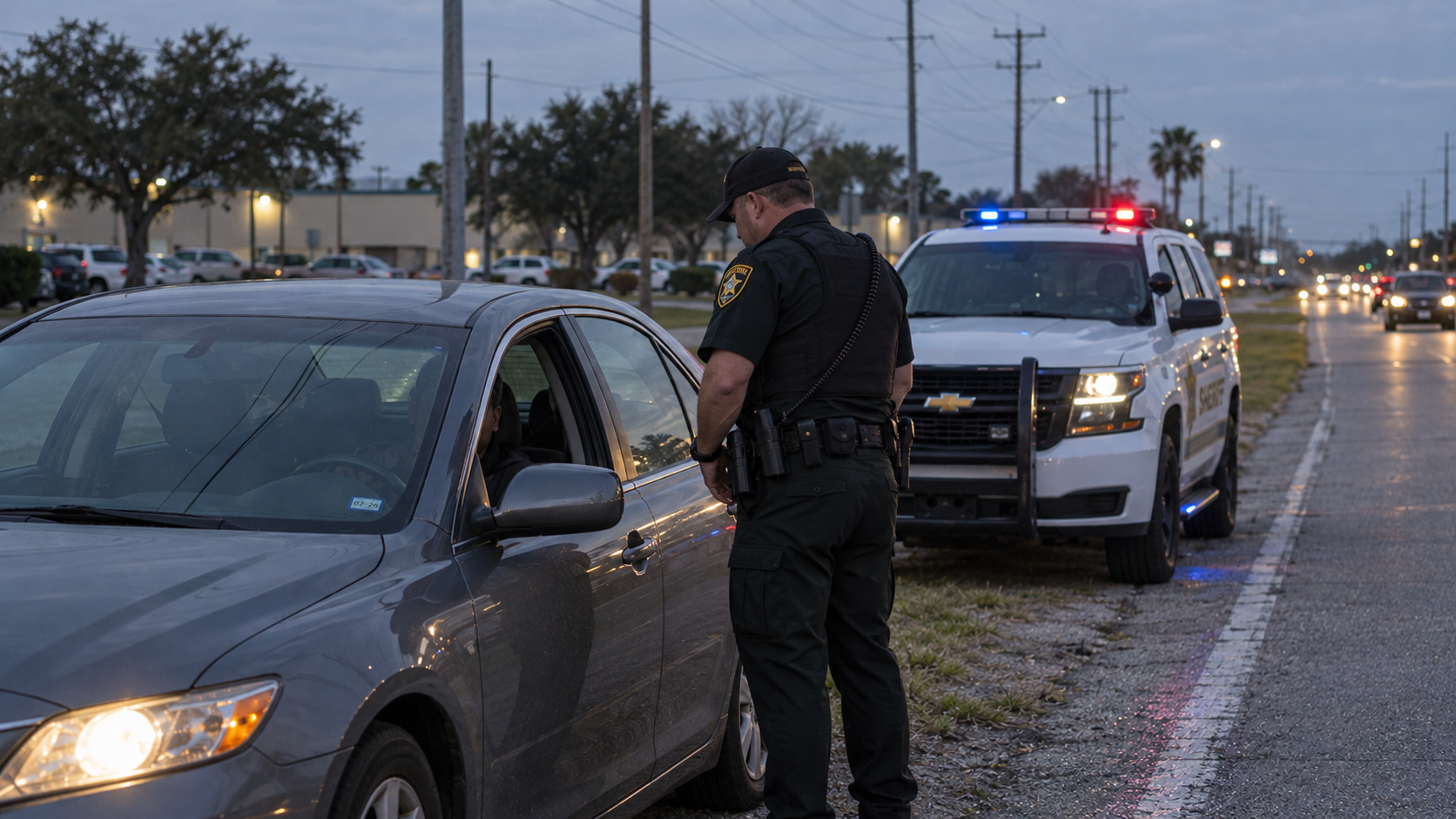
Getting pulled over for suspected DWI on Judge Perez Drive, Paris Road, or St. Bernard Highway can lead to serious consequences. A DWI arrest can affect your driver's license, your employment, and your criminal record.
What happens during the traffic stop matters. So does what you do afterward.
Under Louisiana Revised Statutes § 14:98, the offense is officially called operating a vehicle while impaired, although most people know it as DWI or DUI.
I represent people facing DWI charges in St. Bernard Parish and throughout the New Orleans area. Here's what you should know about your rights during a traffic stop, chemical testing, and the deadlines that follow an arrest.
What Should You Do During a DWI Traffic Stop?
If a St. Bernard Parish Sheriff's deputy or Louisiana State Trooper pulls you over, find a safe place to stop and remain in your vehicle unless instructed otherwise.
An officer investigating a possible DWI will look for signs of impairment, including your driving behavior, appearance, speech, and responses to questions.
There are several things you can do to protect your rights without interfering with the investigation.
Remain calm and cooperative. You should follow lawful instructions, but cooperating with an officer does not mean you have to answer every investigative question.
Provide your documents. Louisiana drivers are required to provide their driver's license and comply with applicable vehicle registration and insurance requirements.
Know when you can remain silent. You generally do not have to answer investigative questions about where you have been, whether you have been drinking, or how much alcohol you consumed. You can politely decline to answer questions without legal counsel.
Do not lie to the officer. Giving false information can create additional problems. If you do not want to answer a question, declining to answer is generally preferable to making a false statement.
You can decline consent to a vehicle search. Police may ask permission to search your car. You can refuse consent, although officers may still conduct a lawful search under certain circumstances without your permission. Never physically interfere with a search.
The goal is to remain respectful, follow lawful instructions, and avoid making unnecessary statements that could later be used as evidence.
Can You Refuse a Field Sobriety Test in Louisiana?
During a DWI investigation, an officer may ask you to perform standardized field sobriety tests.
The three commonly used tests are:
Horizontal gaze nystagmus test: The officer observes your eye movements while you follow an object.
Walk-and-turn test: You walk heel-to-toe, turn, and return while following specific instructions.
One-leg stand test: You balance on one leg while counting as directed.
These tests are intended to help officers identify possible impairment. However, performance can also be affected by medical conditions, physical limitations, footwear, uneven surfaces, and other circumstances.
In Louisiana, drivers can generally decline voluntary roadside field sobriety exercises. Declining these tests does not trigger the automatic license suspension associated with refusing a chemical test under the state's implied consent law.
However, an officer can still make an arrest based on other evidence of impairment, including driving behavior, physical observations, statements, and other circumstances.
It is important to distinguish roadside field sobriety exercises from chemical testing following an arrest. The legal consequences are different.
Louisiana Breath Tests and Implied Consent Laws
Louisiana's implied consent law, R.S. 32:661, generally provides that drivers operating vehicles on public highways are deemed to have consented to qualifying chemical testing when arrested under the circumstances specified by law.
Chemical testing may involve breath, blood, urine, or another bodily substance, depending on the investigation and applicable procedures.
Louisiana's statutory blood alcohol concentration (BAC) thresholds include:
Drivers 21 and older: 0.08%.
Drivers under 21: 0.02% for purposes of the applicable underage alcohol-driving provisions and administrative consequences.
A driver can also face a DWI charge based on impairment by alcohol or drugs even when a BAC test does not establish a reading of 0.08% or higher.
Before requesting a chemical test, an officer must read the standardized rights form required by Louisiana law, including information about the consequences of submitting to or refusing testing.
What Happens If You Refuse a Breath Test?
Refusing a chemical test can result in significant penalties.
Under R.S. 32:667, the ordinary administrative suspension periods for refusing a required chemical test are:
First refusal: One-year driver's license suspension.
Second or subsequent refusal within ten years: Two-year suspension.
Refusal may also be introduced as evidence in criminal proceedings.
Under R.S. 14:98.7, refusing certain chemical testing after two previous, separate refusals can constitute a separate criminal offense. Additional criminal consequences can also apply in certain serious-injury or fatality cases.
Refusing a breath test does not necessarily prevent law enforcement from obtaining other chemical evidence. Depending on the circumstances, officers may seek a warrant or use other procedures authorized by law.
Should You Ask for a Lawyer Before Taking the Breath Test?
You can request an attorney, but you should not assume that requesting legal counsel will postpone chemical testing.
Louisiana law does not generally give a driver the right to delay a breath or blood test until an attorney is available.
Refusing or delaying testing while waiting for an attorney may expose you to the same consequences as a refusal.
Because both submission and refusal can have significant legal consequences, it is important to understand the information provided in the chemical-test rights form.
Arrested for DWI? You Have 30 Days to Request a License Hearing
If your license was seized after a Louisiana DWI arrest, you generally have 30 days from the date of arrest to request an administrative hearing.
This is one of the most important deadlines in a DWI case, and it can arrive well before your first criminal court appearance.
When a driver refuses chemical testing or submits to testing that meets the statutory BAC thresholds, the arresting officer generally seizes the driver's license and issues a temporary driving receipt.
That receipt ordinarily authorizes driving for up to 30 days, subject to the conditions of Louisiana law.
To contest the proposed administrative suspension, you must submit a timely written request for a hearing with the Louisiana Department of Public Safety and Corrections, Office of Motor Vehicles (OMV).
A timely hearing request can extend temporary driving privileges while the hearing is pending when the applicable requirements are met, including surrender of a valid license.
If you do not request a hearing within the required period, the administrative suspension generally takes effect. Limited exceptions may be available when circumstances such as incarceration or hospitalization prevented a timely request, but they should not be relied upon as a substitute for acting within 30 days.
The administrative hearing is an opportunity to challenge the proposed suspension. Issues may include whether the officer had legal grounds for the stop and arrest, whether the proper procedures were followed, and whether the testing or refusal requirements were satisfied.
You can find more information through the Louisiana Division of Administrative Law.
Your License Suspension and Criminal DWI Charge Are Separate Matters
A Louisiana DWI arrest can result in two distinct proceedings:
The administrative case concerns your driving privileges and is handled through the Office of Motor Vehicles.
The criminal case concerns the DWI charge itself and proceeds through the criminal justice system.
Successfully defending one does not automatically resolve the other.
This is why it is important to address both matters promptly instead of waiting for your first court date.
Can You Get a Restricted License After a DWI Suspension?
Some drivers qualify for restricted driving privileges during an administrative suspension.
Depending on the circumstances, Louisiana law allows certain drivers to obtain a restricted or hardship license after installing an approved ignition interlock device and satisfying other applicable requirements.
An ignition interlock device requires a breath sample before allowing the vehicle to start.
Eligibility depends on factors including the reason for suspension, prior violations, test results, and whether the case involved serious bodily injury or a fatality.
A restricted license is not automatic in every case, and some suspensions carry additional restrictions.
What Happens After a First DWI Arrest in Louisiana?
A first-offense DWI is generally prosecuted as a misdemeanor, but that does not mean the consequences are minor.
Under R.S. 14:98.1, a first conviction can carry fines, imprisonment, probation conditions, substance abuse education or treatment, and other requirements. The specific penalties depend on the circumstances, including BAC results and any aggravating factors.
A DWI arrest, however, is not the same as a conviction.
Depending on the evidence, an attorney may examine:
Whether the officer had reasonable suspicion to initiate the traffic stop.
Whether probable cause existed for the arrest.
Whether field sobriety tests were administered and interpreted properly.
Whether chemical testing equipment and procedures complied with applicable requirements.
Whether the prosecution can establish every element of the offense.
Some cases involve grounds to challenge evidence or seek dismissal. Others may involve negotiations over charges or sentencing.
The appropriate defense depends on the facts, not simply whether a driver submitted to or refused testing.
Can a First DWI Be Dismissed or Expunged Under Article 894?
Louisiana Code of Criminal Procedure Article 894 allows courts to defer or suspend certain misdemeanor sentences and impose probation when authorized by law.
In qualifying cases, a court may later set aside the conviction and dismiss the prosecution after the defendant successfully completes the applicable conditions.
However, Article 894 relief is discretionary and subject to specific requirements. It does not automatically dismiss a charge or erase an arrest from your record.
An Article 894 dismissal can also remain relevant for purposes of future repeat-offender prosecution.
Expungement is a separate legal process. Eligible individuals may be able to petition for expungement under Louisiana law, but eligibility and procedural requirements must be evaluated independently.
What Should You Do Immediately After a DWI Arrest?
If you have been arrested for DWI in St. Bernard Parish, take these steps as soon as possible:
Keep every document you received. This includes the citation, arrest paperwork, temporary driving receipt, bond paperwork, and any court notices.
Mark your 30-day hearing deadline. Do not assume your criminal court date is the deadline for challenging your license suspension.
Write down what happened. Record the location of the stop, what the officer said, which tests were requested, and anything else you remember while the details are fresh.
Preserve potential evidence. Save any relevant dashcam footage, receipts, messages, or information from witnesses.
Avoid discussing your case publicly. Statements on social media or conversations about the arrest can become evidence.
Contact a Louisiana DWI defense attorney. An attorney can evaluate the administrative and criminal proceedings and explain the deadlines that apply to your case.
Frequently Asked Questions About DWI Arrests in St. Bernard Parish
Can I be arrested for DWI if my BAC is below 0.08%?
Yes. Louisiana law allows DWI prosecution based on impairment by alcohol or drugs, even without a BAC reading of 0.08% or higher. A chemical test is not the only evidence that may be used.
Does refusing a breath test prevent a DWI conviction?
No. Prosecutors may rely on other evidence, including officer observations, witness testimony, driving behavior, and admissible evidence of refusal. Refusing chemical testing can also result in separate license penalties.
Will my driver's license automatically be suspended after a DWI arrest?
A qualifying test result or refusal can trigger an administrative suspension. You generally have 30 days from arrest to request a hearing to challenge it. The outcome depends on the administrative proceedings and applicable law.
Do I need a lawyer for a first DWI offense?
You are not required to hire a private attorney, but a first DWI can carry serious consequences. Legal representation can help you understand the evidence, challenge improper procedures, meet licensing deadlines, and evaluate potential defenses.
St. Bernard Parish DWI Defense — McLaren Law Firm
A DWI arrest can put your driving privileges, job, and future at risk. But being arrested does not mean you have been convicted, and the prosecution still has to prove its case.
At McLaren Law Firm, I personally handle cases for clients in St. Bernard Parish and the greater New Orleans area. I review the circumstances of the arrest, examine the evidence, and help clients understand their options in both criminal and administrative proceedings.
If you were arrested for DWI in Chalmette, Arabi, Meraux, or elsewhere in St. Bernard Parish, contact my office as soon as possible. The 30-day license hearing deadline is especially important.
McLaren Law Firm LLC
2203 Pakenham Drive
Chalmette, LA 70043
Phone: 504-300-8338
Website: mclarenlawfirm.com
This article provides general information about Louisiana law and does not constitute legal advice. Reading this article does not establish an attorney-client relationship.